Six Front Wheel Hub Assembly Quotes, One Honest Comparison
· Jane Smith
The problem I thought I had
Context first: I handle purchasing and vendor coordination for a small auto parts distributor—about 30 people. I report to both operations and finance, which means when a cheap part fails, I hear about it from two directions.
Last spring I sent the same RFQ to six suppliers for a front wheel hub assembly we move regularly—mid-size sedan, ABS-equipped, steady aftermarket demand. The quotes came back between $31 and $78 per unit. Same part number on the RFQ. Same vehicle fitment. Same order quantity.
I spent two days convinced that three of those suppliers were either gouging us or about to fold. Then I started reading the fine print, and the price spread stopped being the interesting part.
I figured I had a pricing problem. Our previous supplier had raised prices twice in eighteen months, and I assumed the variance was just the market being the market—some suppliers are hungrier, some are established, some cut corners. Pick the middle of the pack, check a sample, move on. That's how I'd done it for years.
What I actually had was a comparison problem. Only two of those six quotes could be lined up next to each other and compared honestly. The rest were quoting different products while using the same words.
What was actually going on
This is the part that took me embarrassingly long to see. The quotes weren't wrong. My RFQ was.
"Same part" doesn't mean same assembly
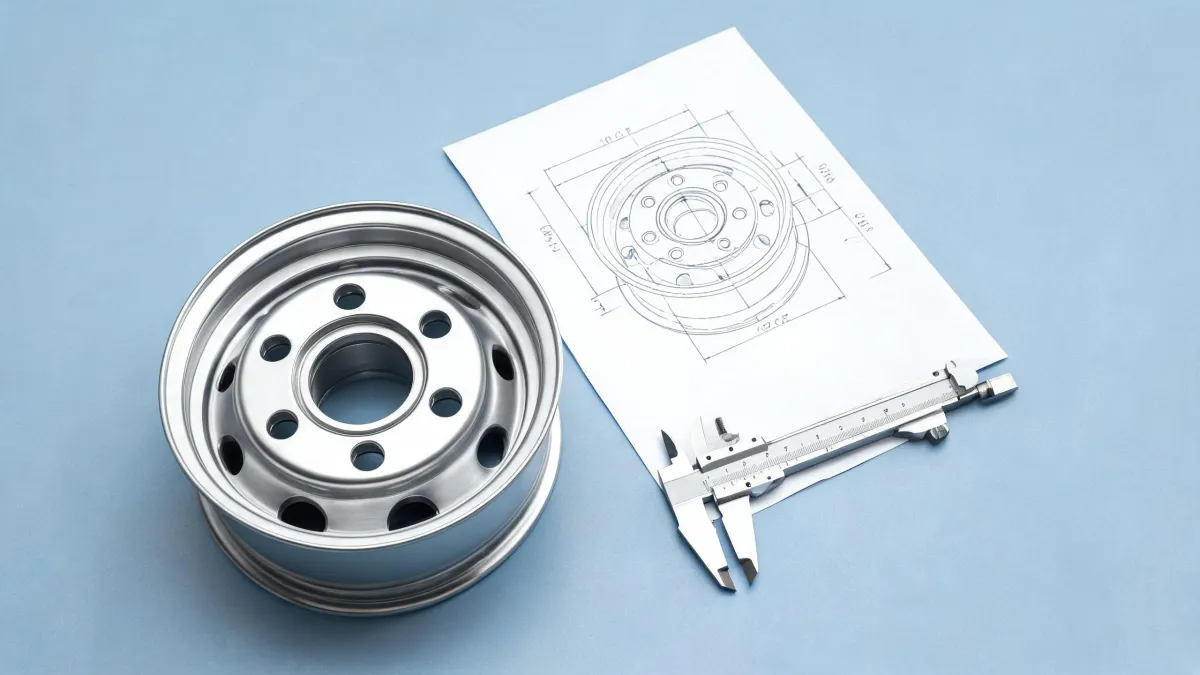
A front wheel hub assembly can mean the hub and bearing unit, or a wheel hub bearing and steering knuckle assembly, or a front passenger wheel hub assembly with the ABS sensor baked in. One supplier quoted the bearing cartridge only. Another quoted the full knuckle assembly. Both wrote "front wheel hub assembly" on the quote, and I didn't catch it until I asked for drawings (this was back in early 2023, before I started requiring the diagram upfront).
Even within the same category, bearing type matters—tapered versus ball—and flange bolt patterns vary by trim level within the same model year. An OEM cross-reference number resolves most of this. A vehicle fitment description resolves almost none of it.
Quality tier is invisible on a quote sheet
One of the $31 quotes was an aftermarket-grade unit with a one-year warranty and no material documentation. One of the $70 quotes was an OEM-grade assembly with IATF 16949 certification on file (that's the automotive quality management standard—you can check current requirements at iatfglobaloversight.org) and traceable bearing batches. Those are not the same product, and a purchase order doesn't know the difference.
I'm not a metallurgist, so I can't tell you why one bearing steel spec outlasts another. What I can tell you is that the cheap quote and the expensive quote were being compared as if price were the only variable. It wasn't.
Incoterms hide half the cost
Three of the quotes were FOB, two were DDP, and one didn't say. A $31 FOB quote with freight, duty, and port fees on top lands closer to $44 depending on shipment size. The DDP quotes looked expensive until I did the landed-cost math. This one is basic and I still missed it on the first pass, because I was sorting by unit price like an idiot.
MOQ and quote validity
Two suppliers quoted at a 500-piece price break and then quoted again at our actual 80-piece order. One quote was valid for 30 days; another had no validity date at all. If I'd compared the 500-piece number to the 80-piece number, I'd have made a decision on numbers that didn't apply to us.
None of this is exotic. Every one of these differences is standard in sourcing. But when quotes land in your inbox within a week of each other, they look comparable, and that's the trap.
What it costs to compare the wrong things
In 2022 I went with the lowest quote on a similar assembly. About 40 units, roughly $28 each. The units arrived, looked fine, installed fine. Eight thousand miles later the bearings started howling, and the returns came back in waves.
If I remember correctly, we ate around $1,100 in returns, replacement labor, and shipping—plus a customer who'd been ordering from us for three years and now doesn't. The part was cheap. The decision wasn't.
There's a second cost that never shows up in the return ledger: paperwork. A few years earlier, a supplier quoted us a great price on a small run but couldn't produce a proper commercial invoice—handwritten receipt, no customs paperwork. Finance rejected the expense and I ate about $2,400 out of the department budget. Now I verify invoicing and documentation capability before I verify price. It's a boring checklist item that has saved me more than any negotiation tactic.
Looking back, I should have paid the extra $6–8 per unit for the supplier with documentation and a warranty I could actually claim against. At the time the numbers said otherwise—the spreadsheet clearly favored the cheap option. Something felt off about how fast that supplier answered every question, though. Turned out fast answers were a preview of slow delivery. I ignored the gut feeling because the math was clean. The math was clean and wrong.
The part that still bothers me
The quote spread hits small buyers hardest. When your annual volume is modest, some suppliers won't respond at all, and the ones who do sometimes pad the quote because they assume the order won't convert. I've been ghosted by suppliers who were happy to take a meeting and then never sent numbers.
The vendors who treated our $400 trial order like it mattered are the ones we still buy from today, at ten times that volume. Small doesn't mean unimportant. It means unproven. A supplier who can't tell the difference is telling you something about how they'll handle a problem order later.
How I compare quotes now
People ask me how to compare front wheel hub assembly supplier quotes. My answer is boring: normalize before you compare. I don't have a sophisticated system—I have a template and a rule.
- One RFQ format for everyone. OEM cross-reference number, vehicle years and trim, ABS sensor included or not, full assembly or hub bearing only, order quantity, delivery destination, Incoterm, warranty terms, and a required assembly diagram attached to each quote.
- Convert everything to landed cost per unit. Freight, duty, port fees, and payment terms go into the same column. Sort after that, not before.
- Demand the diagram before the sample. A supplier who can send a labeled assembly diagram with torque specs and an OEM cross-reference is a supplier who knows the product. One who sends a stock photo isn't. When you're vetting a China front wheel hub assembly diagram supplier, that drawing is the first document I ask for—before price, before samples.
- Check the paperwork trail. Commercial invoice capability, IATF 16949 certificate on file, batch traceability if they claim it.
- Buy the sample. Then actually test it. A sample that arrives in five days and fails in eight thousand miles is still data.
The supplier we've stayed with longest came out of our first serious attempt at ILJIN front wheel hub assembly sourcing. We started with a 60-piece order. They weren't the cheapest quote. They were the only one that sent the assembly diagram, the OEM cross-reference, and a clear Incoterm without me having to ask twice. That's most of what I need from a front wheel hub assembly supplier, and it took me years to figure out that's what I should have been asking for all along.
My experience is based on roughly 300 orders across a dozen or so suppliers, mostly mid-range aftermarket units for passenger vehicles. If you're buying heavy-duty, performance, or fleet-grade assemblies, your spec picture is going to look different from mine—the normalization logic holds, but the checklist items won't all transfer.
The quotes will still spread. That part doesn't change. What changes is whether the spread means anything.

Jane Smith
I’m Jane Smith, a senior content writer with over 15 years of experience in the packaging and printing industry. I specialize in writing about the latest trends, technologies, and best practices in packaging design, sustainability, and printing techniques. My goal is to help businesses understand complex printing processes and design solutions that enhance both product packaging and brand visibility.